
Boise Previous-Resident Sources
No single roll spans the full life of a Boise address. The current parcel leads into recorded instruments. Printed directories and cross-reference books supply dated occupants or subscribers. Maps explain the building, lot, and number in use. Archives and newspapers bridge years that are not online.
| Source | Years it covers | Where held | What it shows |
|---|---|---|---|
| Ada Recorder online index | Observed January 1, 1982 to August 9, 2026 | Clerk/Recorder Tyler portal and counter | Recorded parties, dates, document type, instrument or book/page |
| Polk directories | Library run begins in 1891 | Boise Public Library | Dated name, address, and listing context |
| Telephone and Hill-Donnelly books | Telephone books from 1948; cross-reference runs as cataloged | Boise Public Library | Subscriber or address-to-name leads |
| Sanborn maps | Boise editions and pasteovers from 1884 through 1976 | Idaho State Archives and digital sources | Historic building footprint, use, and street context |
| City permits and archives | Varies by series | Boise Accela, City Clerk, and Boise City Archives | Published site activity, project, or dated municipal file |
For a recent trail, start with the assessor and recorder. For a nineteenth- or early twentieth-century trail, start with the physical directory shelf, Sanborn maps, newspapers, and archives, then connect forward to the modern parcel.
Fix the Boise Resident Parcel
Enter the modern situs address in the Ada County Property Search after accepting its reference-data terms. Save the parcel identifier, property year, physical address parts, subdivision, section, acreage, and brief legal description. Situs means the place where the property sits. It may differ from the owner’s mailing address.
The assessor schema also has prior-parcel and reference fields that may help when land was split or combined. Those fields are leads, not a certified title history. If an old address does not match, compare the parcel layer, final plats, survey records, and Ada’s four address grids. Boise proper and the county area of impact may also route address questions to different offices.
Trace Boise Resident Deeds Backward
The Ada County Recorder index searches both names, recording dates, instrument number, book/page, grantor, grantee, parcel, document type, and section-township-range. Its displayed online span began January 1, 1982 in the inspected session and updates nightly Monday through Friday. That date marks web coverage, not the first Ada deed.
- Copy the current parcel, situs address, and legal-description text from the assessor.
- Search the parcel with a narrow date range. Note the instrument, document type, date, and book/page.
- Read the grantor and grantee roles. Search the seller as an earlier grantee to find that party’s acquisition.
- Repeat while checking whether the legal description or parcel identifier changed.
- For older books, blocked categories, or missing images, call 208-287-6840 or visit the Recorder counter at 200 W Front Street, Room 1207.
- Grantor
- The party transferring an interest in the recorded instrument.
- Grantee
- The party receiving an interest in that instrument.
- Chain of title
- The linked series of recorded transfers associated with the land.
- Legal description
- The lot, block, subdivision, or survey language that identifies land even when its street number changes.
The portal says its index acts like a card catalog. Get the actual instrument or counter copy when the wording matters. Some categories are blocked from the web and require an email to recorders@adacounty.idaho.gov or an office request.
Boise Resident Survey Screens
The Ada plats and surveys search supplies the map-record side of a split parcel or changed legal description.
The screen confirms the official index route. A selected plat or survey can explain why an old lot no longer matches today’s parcel.
The Recorder also offers Fraud Notify for recorded-name alerts.
This alert is useful for present document activity. It does not reconstruct previous residents or replace a backward deed search.
Boise Addresses Can Shift
Ada County uses four numbering grids, each with a zero-point origin and numbers that rise outward. An address may be corrected when its number is out of sequence, tied poorly to a main road or private access, or placed on the wrong odd/even side. New subdivision and condominium addresses follow a recorded final plat. A county address decision may be appealed within 30 days.
These rules explain many failed old-address searches. Preserve every directional, suffix, unit, and street type from the dated source. If the number disappears, use the legal description, subdivision, survey, corner record, and Sanborn sheet to locate the same physical place. Boise city annexation can also make a current city search disagree with an older directory.
Map Boise Previous Residents
Sanborn fire-insurance maps date the built setting around an address. Idaho’s research guide lists Boise maps and pasteovers for 1884, 1888, 1893, 1903 with later work, 1912, 1910 with 1922 pasteovers, later 1912 pasteovers, a 1956 republication, and editions through 1976. A sheet can show that a structure existed and how a lot was arranged. It does not name all occupants.
A strong Boise address bridge pairs a 1912 Sanborn sheet with a nearby Polk directory year, a newspaper notice, and a deed instrument. That mix can place a prior household in time without exposing a current protected address. It also catches a renumbered street that an address-only search would miss.
Boise Archives Fill Gaps
Boise City Archives holds maps, photos, personal papers, finding aids, and municipal collections. Many collections are still being processed, so an empty digital search is not proof that no physical file exists.
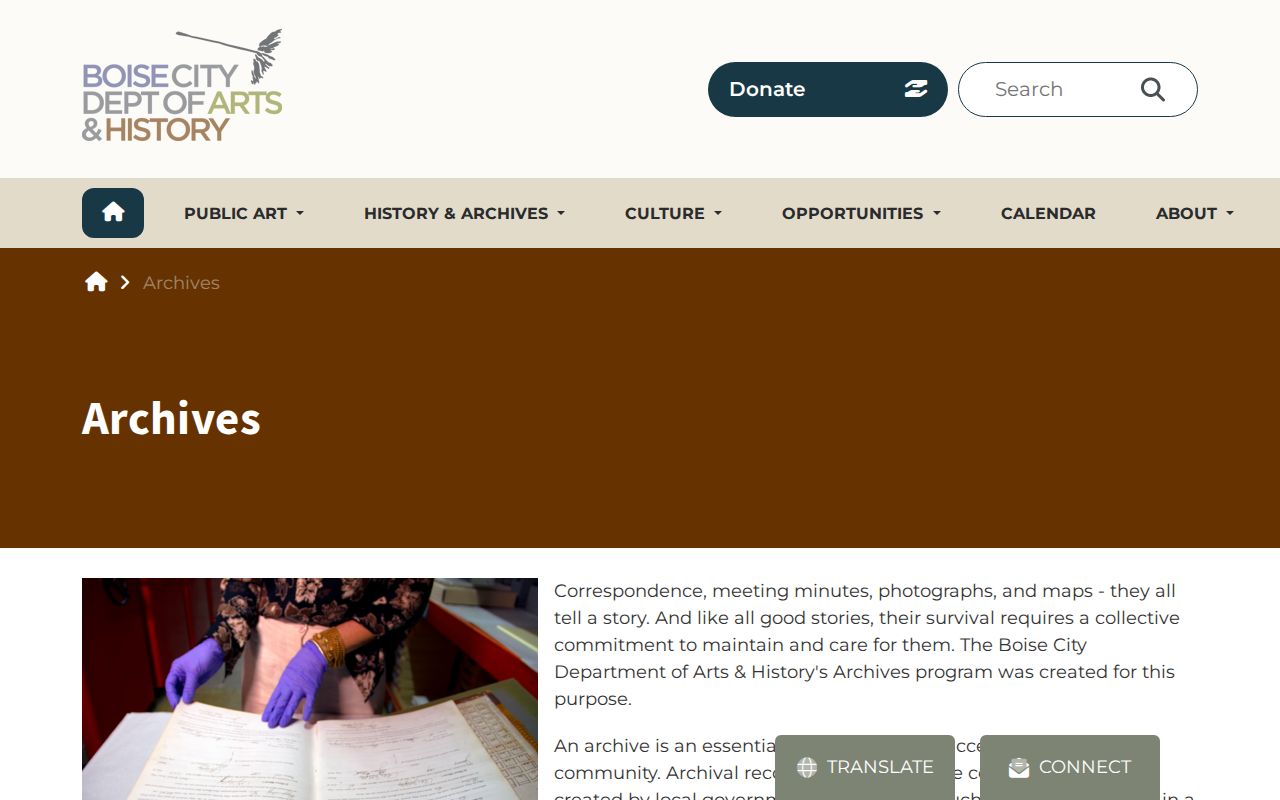
The archive page points to both digital discovery and appointment-based research. City Clerk requests can also target old permits, cemetery series, poll books, and other named municipal records.
Idaho State Archives adds county and city records, newspapers, family histories, reconstructed census indexes, maps, and research help. Its first 30 minutes of reference help are free; further work is priced per half-hour, up to two hours. Boise Public Library offers paid directory, obituary, and clipping lookups when a volume is not online.
Build a Boise Household Trail
Owners are only half the story. Use the collections described in the Boise city directory when the question is who was listed at the address. The library’s Polk run starts in 1891, telephone books in 1948, and its Hill-Donnelly cross-reference volumes can reverse an address to a name for covered years. Treat each line as a dated listing, not continuous residence.
- Choose the closest directory year and copy the entry exactly, including abbreviations.
- Check the prior and next available years for arrival, departure, or a changed house number.
- Pair the name and address with the closest available census, newspaper, obituary, or city record.
- Use an obituary, cemetery record, or probate-related instrument as an endpoint only when the dates and identity match.
The State Archives reconstructed 1890 census is especially useful for Boise previous residents from 1885–1894. It draws on births, marriages, deaths, wills, land and tax files, court records, newspapers, and Boise directories to address the lost federal census.
Boise Public Library’s local-history service can search a specific person or business in a specific directory year. The listed charge is $1.25 per directory page, with no more than five pages per week. Obituary, death-notice, clipping, and Idaho Statesman article requests cost $5.25 each, with a four-request weekly limit. Confirm current fees before ordering. A narrow request should name the year, spelling, and address.
The newspaper collection extends beyond the obituary index. The library advertises Idaho Statesman coverage from July 26, 1864 to the present, while its obituary index covers 1957–2017. Newspapers can supply sale notices, social items, deaths, civic activity, and address clues. They should be cited as dated reports, not treated as a complete household list. Compare a notice with the directory or deed before attaching it to previous residents.
Early Boise research may end at a cemetery or city record rather than a state certificate. The Pioneer Cemetery tour identifies an 1864 marker and notes that deaths were not logged in a systematic way until later. City election guidance identifies permanent cemetery files such as lot ownership, inscriptions, interment, removal, and maps. No complete public cemetery-name search was found, so a precise City Clerk request is the honest fallback.
For records before the web index, ask the Recorder whether the relevant deed book or microfilm survives and how copies are ordered. Then search the Idaho State Archives catalog and Boise Library resources. The comparison is striking: the local Polk shelf starts in 1891, nearly nine decades before the observed recorder web start. That does not make a directory stronger than a deed. It shows why previous residents need an era-based search plan.
Write the finished trail as a set of dated statements. “Listed at this address in the 1917 Polk directory” is sound when the page was checked. “Named as grantee in an instrument recorded on this date” is equally clear. Avoid “lived here continuously” unless several sources truly support it. This wording preserves the difference between an index, an image, a city record, and a historical inference.
Lawful use. Research Boise previous residents for house or family history. Never use a dated address trail to track, harass, or expose a living person.
Note: Portal fields and coverage dates were inspected August 23, 2026; confirm old books, copy rules, and access with the named custodian.